Best of the Maldives: Michelin Keys – Cheval Blanc / Soneva Fushi

Michelin keys

Trying to get some measurable benchmark by with to distill the myriad subjective characteristics of a property is the only of the Holy Grails of guides. I have written a number of pieces on the distinct challenges that resort ratings in the Maldives face and some ideas on how to navigate them. The internet has made “ratings” a cornerstone of many guide sites though many of these crowd-sourced versions come with their own problems and biases. But now the pinnacle of guide books, the OG (“Original Guide”), Michelin has added “stars” (well “keys”) to its hotel guide. And it includes a number (12) of Maldives resorts.

  • Michelin describes its criteria as the following:
  • Design – excellence in architecture and interior design.
  • Service – quality and consistency of service
  • Character – overall personality and character
  • Value – value for the price
  • Contribution – significant contribution to the neighborhood or setting

As with Michelin stars for restaurants, “3” keys is the highest accolade. For perspective, out of the dozens of luxury properties in the Maldives, only 2 have achieved 3 key status: Cheval Blanc Randheli and Soneva Fushi. Soneva Fushi would have been the first to come to my mind so that seems clear. Though it does beg the question about the omission of Soneva Jani which has all of the style and distinction of Soneva Fushi and in many respects more so because it was built many years after Soneva Fushi and it feels like they enhanced Jani with all the lessons learned from their experience with Fushi. I would question the selection of Cheval Blanc Ranheli for the top accolade as I don’t know anything it does as a “significant contribution” to the area, and “3 stars” pretty much means you ace every single aspect under consideration.

  • “Three Keys: An extraordinary stay – The ultimate in comfort and service, style and elegance. It is one of the world’s most remarkable and extraordinary stays and a destination for the trip of a lifetime.”

There are some very obvious omissions like Velaa, a contender for at least 2 keys (“A hotel that’s unique in every way, where a memorable experience is always a guarantee. A hotel of character and charm, run with obvious pride and considerable care.”, and I would say that Oaga warrants a key based on their criteria (“A true gem with personality. Service always goes the extra mile, and the hotel provides much more than others in its price range”).

Whatever its shortcomings, at least you have professional hospitality experts assessing the property and not the owner of a car dealership on their first visit to the destination.


Resort Segmentation

Maldives resort segmentation table

This recent tour made me realise that I really need to consider “Best of the Maldives” posts by price tier. Reethi Rah, Soneva and Velaa may have everything you can imagine, but few of us have the wallets to go there. Now that the sector as tripled in size since Maldives Complete started, you can find just about anything, certainly in the super premium properties. But it remains distinctive when a more modest tiers property offers such a unique or striking feature.

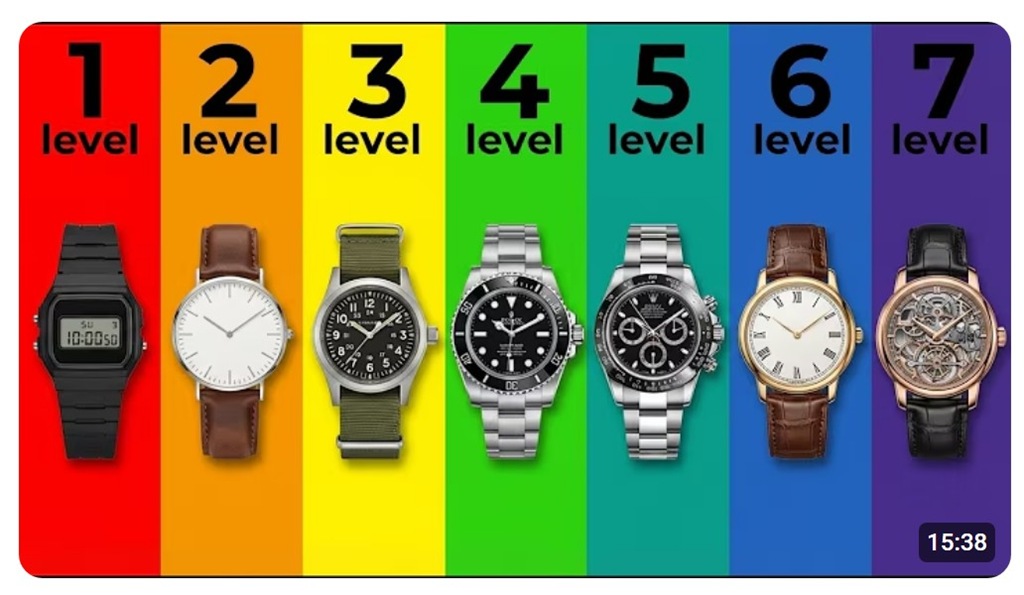
This musing also got me thinking about the core segments that the Maldives resorts have coalesced into. Actually, they are pretty conventional quartiles that you find in many markets (as illustrated in the chart below which compares them to other products):

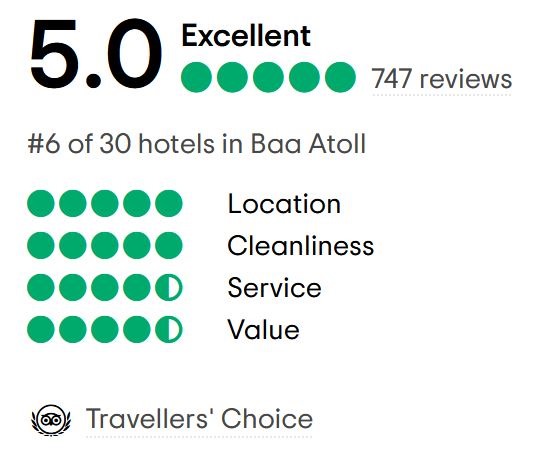
These price bands play an important role in user reviews like Trip Advisor. Such star-ratings are not based on objective box-ticking criteria like hospitality association ratings (which has a long check-list of requirements for each grading class). Instead, these ratings really reflect performance against expectations. As a result, you can get a budget burger joint getting 5-star ratings because it is the best $3 burger that you have ever had. Conversely, a white-linen, silver setting gourmet establishment can get a 1-star rating if the meat is overcooked and service a bit slow during your $100 meal.

The key to exceeding expectations is (a) tick all of the boxes for your class (the cake), and (b) add a few special bits above the class (treats) that are valued and memorable. For example, Siyam World sits squarely in the Business Class segment, and yet still snared the crown as one of the Top 10 Hotels in the World in Tripadvisor’s 2025 Travelers’ Choice Best of the Best Awards 2025. It sits in the comfortable “business class” of Maldives resorts, but adds enough luxury touches to feel distinctive in that class.

How to Interpret a Resort Review

Review maldives

Ratings are often the first thing people turn to in deciding on their resort of choice, but these handy shorthands are also fraught with biases and confusion. I thought I would pull back the curtains a bit on these metrics and badges to makes then easier to use and interpret when research your perfect resort.

  • Industry star ratings indicate how many boxes a property has ticked against a list of criteria
  • Social media star ratings (mostly) indicate how a property has performed against expectations.
  • Industry awards are (mostly) just pay-for-cachet shills.

INDUSTRY STAR RATINGS

Traditional “star” ratings (eg. “5-star hotel”) were developed by industry bodies and were determined by a methodical list of criteria. The advantage to this approach is that is objective. The problem was that the checklist reflects quantitative metrics, but not qualitative aspects. It counts things like the number of electrical sockets and whether the bathroom has a bidet, but doesn’t assess the quality of design, materials, aesthetics, etc. Resorts quickly learned to game this system by installing the cheapest versions of anything that would tick the assessor’s boxes to get a coveted “5-star” designation for a fairly chintzy property.

SOCIAL MEDIA REVIEW RATINGS

The Internet and social media introduced the notion of crowd-sourced reviews. The stars that visitors gave were anything but methodical or defined. The reviews were completely haphazard with “1-star: Terrible” reviews going to exceptional properties who made one slip-up during their visit, and “5-star: Excellent” reviews going to mediocre properties visited by people who were just delighted to be on holiday or wanted to boast to the world how amazing it all was.

The notion is that a savvy reader will dismiss the outliers and focus on the shape of the score histogram (eg. shifted more heavily to positive or negative side). Social media does add the richness of two features: (a) the text review itself (so you can drill down into the specifics of the assessment as make your own judgement about whether the attributes focused on concern you or the assessment seems justified), and (b) the authority of the writer (based on reputational scoring like “Helpful” votes).

Seth Godin articulates this dynamic well in this piece “I Hate This Restaurant” (and this is just the inadvertent failure ignoring the deliberate toxic practice of social media extortion where people find tiny failings and demand a big discounts or compensation under threat of them unleashing their condemnations all over social media):

  • ·If you look at many 1-star reviews (of books, of music, of restaurants) this is precisely what you’re going to see. A mismatch of expectations. A mismatch that is blamed, completely, on the person who created the work, not the critic. It doesn’t matter that the thing was clearly marked. It doesn’t matter that the thing was extraordinarily well-produced. And it doesn’t matter if just about everyone else experiencing it was thoroughly delighted. Because for this spoiled, under-informed and impatient patron, it failed.”

As a result of this “expectations driven” reviewing, many resorts have shifted the direction of their approach to ratings. Instead of trying to goose their rating as high as possible with covering the official bases as expediently as possible, now many properties voluntarily downgrade the advertised “rating”. So they might officially be a “5 star” property, but they advertise as a “4+ star”. That way, guest come expecting one standard of quality, but find a higher than expected one. Exceeding such expectations is the key to strong social media ratings. Better to be a 4-star on the profile but a 5-star on TripAdvisor, than visa-versa.

INDUSTRY BODY AWARDS

Whatever you do, dismiss the press releases and website merit badges from industry awards (eg. “Best Hotel in the Indian Ocean by the So-So-So Travel Group”). Said industry body charges X-thousand dollars for a resort to buy a table at their award ceremony and pretty much makes sure that everyone who attends, walks away with an award. In fact, in some cases, the more awards a resort flaunts, the more likely they are trying to cover up major inadequacies by buying endorsements (Yes, I know, I have featured some awards on the website and my email signature, BUT I did not pay anything for these and would never).

So with all of these review shortcomings, how is one to assess the quality of a resort in researching a holiday? I do check out the social media ratings (mostly TripAdvisor). I look at the shape of the star distribution (eg. how many 1-stars, how many 2, etc…). I will take a peek at a couple of 1-star reviews our of curiosity to see if they had identified anything truly serious, but in nearly all cases it is just the rambling trolling of a disaffected whinger. I do select for the most highly rated reviewers (eg. most Helpful votes) as these folks are likely to have sensible perspective so that their review will share useful insights.

5 Star Nibbles

Madlives drinks and nibbles

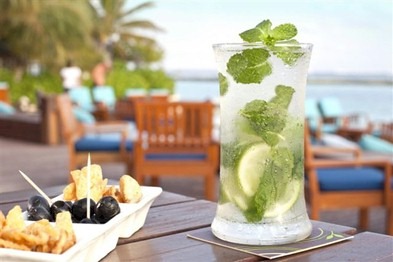
On our latest Tour, a further give-away to the true ‘rating’ of an island occurred to me as we went through our nightly sundowner ritual of pina coladas (for me) and the most bizarre cocktail concoctions that captured my wife’s fancy. The drink nibbles. There is quite a diversity of offerings and here is how they roughly break down (similar parallel in escalating quality to the ‘Welcome Treat’ distinction I already enumerated)…

  • Basic (3 star) = None
  • Smart (4 star) = peanuts, crisps, Bombay mix maybe
  • Elegant (5 star) = olives, spiced nuts
  • Luxury (5+ star) = prepared mini hors-d’oeuvres

I’m still on the hunt for the Best Drinks Nibbles in the Maldives.

Basic, Smart, Elegant, Luxurious

Rating table

So what are the differences between the ratings? What makes a 5 Starand beyond?

The following is my attempt to characterise some of the basic and more subtle distinctions between different tiers of quality from my years of experience in the Maldives. It is not just intended for visitors who are often befuddled by the ratings, but also for the resorts themselves. I meet with typically aspirational resorts who really want to call themselves that next higher star and are equally curious about ‘what it is that I have to do?’

In many cases, I am over simplifying the distinctions, but in doing so I am hoping to highlight the core of the distinction acknowledging that circumstances and details can vary considerably and need to be taken into account. At least, the descriptions that have assembled here provide a starting point for breaking down what these differences of expectations and offers.

In the Maldives, there are essentially 4 classes of accommodation…

  • Casual – 3 star: This category is the budget domain. This is literally ‘basically’ a room. A bed (no guarantees on lumps and typically either too hard or too soft). Often lots of signs of wear all around including something that doesn’t work properly or fixed haphazardly (like a fitting replacement that doesn’t match the others).
  • Smart – 4 star: This category of rooms the heartland of value resorts. The rooms are clean, fresh, well equipped and well maintained. The resorts have invested in fresh paint, and good maintenance. But beyond that, nothing really stands out. The materials and fittings used are on the conventional side. Nothing really stands out in terms of style or design. Often the layout is just a bit awkward with big empty spaces in some areas with tight squeeze in others.
  • Elegant – 5-star: This category is the domain prevalent high-end resorts. The rooms have a real aesthetic design sense with style. They use higher quality materials and fittings. Extra services will be laid on. Wide selection of finely prepared food is on offer.
  • Luxurious – >5 star: This category is the domain of the increasingly prevalent super-premiums. It is a full 5 star…with extra helping of extravagance ladled on top.

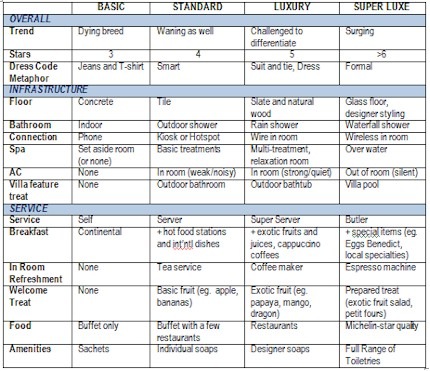
So what does that mean more specifically? I’ve drafted the table above based on my experiences to help provide some illustrative (not comprehensive nor definitive) examples of the differences.  When I say ‘Dress Code Metaphor’ above, I don’t mean that is the ‘dress code’ for people on the resort. I mean that if you were describing the ‘dress code’ of how the resort was ‘dressed up’ as a property, this is how it would boil down.

The considerations above are intended to be the minimums. For example, many ‘Luxury’ or ‘5 Star’ resorts offer butler service, or glass floors, or eggs Benedict. Those offerings alone do not make them ‘Super Luxe’. But if a resort aspiring for ‘Super Luxe’ does not have them, then one has to call into question their claim to that standard. To quote 30 Rock, the absence of these things are sort of ‘Deal Breakers’.

I tried to keep to areas where I could show a variation across all four groupings, but there are other demarcations. For example, a 5 star and 5+ star should never have plastic furniture (unless it is very distinctively styled). That’s a deal breaker on the 5 star rating. Another example is resort features. 3 and 4 star don’t require these, but 5 star and better do. 5-star is typically a special bar, restaurant or spa almost always over the water. Super 5+ needs to be something even more imposing. A few super premiums have even gone underwater (eg. Conrad Rangali, Huvafenfushi) to attain that special distinction.

Another consideration to note is that this smorgasbord of options is a moveable feast. Especially in the ever escalating wow-factor arms races, what used to be exceptional is often now conventional. What used to be a big bet, is now table stakes. For example, when I started coming to the Maldives, there were no spas nor Internet. Now, it’s inconceivable not to offer these things.

The 5-Star Problem

5 Star Fish

So what the heck does ‘5 Star’ mean?

With limited supply and the desire to earn as much as possible from the sustainable natural resource of the idyllic islands of the Maldives, the country and industry is rapidly moving to premium at nearly every property. Now there are over 100 active properties out of which more than half call themselves ‘5 star’. 39 of resorts on Trip Advisor, for example, are listed as 5-star. Of those, 8 have Review Ratings at a full 5-stars as well which is a start.

When everyone is 5-stars, is there any difference? Actually, there are massive differences. So how does one regulate the star awards? Adrian Neville called attention to the issue in a recent Tweet – “Vilamendhoo & Meeru say they are 4 star. This just pushes the Sonevas and O&O etc out to six or seven stars. The 5 star barrier is broken.” Adrian is referring to the trend started in Dubai by the super-premium marques calling themselves 6-star and 7-star out of objection to the fact that to put them in the same league as scores of ‘mere’ 5-stars would under represent the unique distinctions they have implemented.

One of the most prominent ‘Ratings’ these digital days are from TripAdvisor. But, these scores are not objective ratings against absolute and fixed criteria. They are subjective customer satisfaction marks against relative expectations. Someone who got a great deal on a basic property might give ‘5 stars’ to one quite humble resort, while someone who paid top dollar on an extravagant property might give a ‘4 star’ mark if their parsley came facing the wrong direction.

MaldivesComplete’s weighted rating field was an early attempt to reconcile some of this variation in ratings. When MaldivesComplete was launched several years back, several resort portals and tour operators had slightly varying ratings for the islands. I figured that collecting all of these and averaging them would provide both (a) more balanced true rating, and (b) more granular differentiation. But even this approach is growing dated and weaker. A lot of the portals have fallen by the wayside and the tour operator ratings are growing more uniform.

Part of the fuel to the uniformity is the crowding at the top. The 5 star problem. All the resorts are sprucing up and putting in investment to tick the 5 star boxes. The operators are happy to going along with this rating inflation because it helps them to justify higher prices.

Which brings us back to the ‘dirty truth’ that the hotel industry’s own rating systems are quite dated. They try to quantify quality through system of tick boxes. This is not a problem limited to the Maldives. MSNBC highlighted the subject in its piece “The dirty truth about hotel ratings.” Things like the number of bathroom fixtures determine 5-star threshold leading to inane investments in things like quizzical bidets. People going to 5 star resorts would rather have a nicer shower (rain or waterfall shower), than an unused bidet. Some of the hotel star ratings determined by the number of electrical outlets available, and yet don’t make any assessment of Internet speed, strength and accessibility.

I also think that there is somewhat inadvertent muddying between ‘the destination’ and the ‘the resorts’. The Maldives is one of the finest places on earth. It is a 5-star destination. You could put a shack on a Maldivian island and it would be close to a 5-star lifetime experience. As a result, I think that, in the global resort competition, the proliferation of 5-star categorisations is partly due to a global calibration. Resorts that would be 3 or 4 stars on any other ‘ordinary’ beach in the world, become ‘5’ stars in the Maldives. Furthermore, in terms of differentiating Maldives resorts, how do you compare an island with a spectacular house reef but modest infrastructure, with a resort which has no house reef but gold-plated elegance? How do you compare the charm of a more natural aesthetic with the pizzazz of trendy design?

I think the Maldives desperately needs a more structured, methodical and managed star system like that run by Michelin. A Michelin star is a major achievement – ‘worth the trip’. Two stars is a rare distinction. Three stars is hall of fame material. More on that later.