Faux Luxury

faux luxury

This is the first year since COVID that we have not visited the Maldives in July. One might think that now would be a more opportune time than ever. The Maldives Complete site is on track to hit 3 million visitors this year. The destination just keeps adding new properties and features.

But a number of considerations have put us off:

  • REEF DECLINE – It used to be that the accessibly shallow coral reefs were one of the main attractions of the Maldives. The reef decline has not only continued pretty much unabated to where “live” areas are more the exception (or even rarity) rather than the rule. This started happening years ago, but we consoled ourselves that the other marine life was still abundant and we enjoyed the fish soup and other favourite creatures. But as any ecologist will tell you, the coral is the foundation to the reef ecosystem and in recent years we have witnessed a palpable decline in marine life making the Maldives no longer the best snorkeling in the world which was one of our greatest joys visiting there.
  • WEATHER VOLTAILITY – Also due to the climate change, the weather has just become that much more volatile. While peak times of February had uninterrupted clear blue skies and placid waters, July was still delightful with its scattered clouds, gentle sea breezes and occasional passing shower. But these days, February gets the July weather of old, and July weather is getting more and more risky more frequent and more intense actual storms.
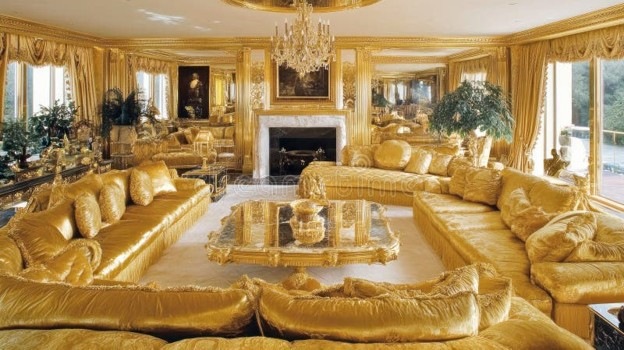
  • MULTINATIONAL INVASION – But the main reason for our demurring was the invasion of international luxury brand properties. I do understand the country wanting to get the most revenue per square hectare that it can out of its limited above-water land mass. And I appreciate the splurging of a fine luxury experience as much as the next person. But the problem is that in more cases than not what is being introduced is “faux luxury”. As Ryan of the Ryan Experience explains in “My #1 Problem With Luxury Hotels”.

But the problem extends far beyond just high-end hotels in the Maldives. This trend is just a subset of the megatrend, so well-articulated by Cory Doctorow, I see everywhere – the “Enshittification of Everything”. Especially acute when the vulture capitalists of private equity get involved to apply their mastery of value extraction to their investment. The business model is to invest in the veneer (the brand plus the wrapping) and not the substance (the underlying product or operations), the frosting not the cake (as exemplified by OTT pastry producers like Lola’s Cupcakes), the sizzle not the steak.

True luxury is almost always…simple (for a brilliant portrayal of true culinary luxury, check out this scene from “The Hundred Foot Journey”). Its quality has no need for adornment. The Krispy Kreme Original Glazed (hot of the press), not the Chocolate Chip Banana Bread donut from Comfortland. A striking example in the restaurant establishment is London’s famed Ivy Restaurant. Renowned for lending a master chef’s hand to traditional British comfort food and an elegant surrounding. Private equity bought that name and then rolled out a chain of mass- produced eateries with extravagant décor curiously much more opulent than the original ever was or ever needed to be. The new Ivy outlet now flaunt the visual clues that you must be somewhere fancy (so your nan feels like she is actually being taken to a special place for her birthday lunch), but the food is bland fare that is mass-produced in a central facility and reheated on site. The look is stunning, but you are paying top dollar for mediocre pub grub.

A Maldives property is becoming as de riguer as a New Bond Street shopfront for every luxury brand in the world, whether they have any hospitality operation or not. Hire in self-absorbed fancy designers who concoct visually dramatic spaces with very little understanding of optimising the Maldives experience. Or just cookie-cutter construction out of a corporate style guide. And for many of the undiscerning affluent who are drawn more to the appearance of luxury than appreciating true luxury, this works just fine. A few well-positioned selfies for their Instagram, a tick off their bucket list and off to the next exotic locale never to return.

Nearly gone are the (a) charming home-grown properties developed and run by Maldivians (Oaga and Syam are rare exceptions to this trend representing a bold statement in guest experience by a new generation of Maldivians), and (b) passion projects (like Soneva, Velaa, Amilla Fushi under the Kruse’s) that were more labors-of-love than mercenary tourist traps.

An integral ingredient to the faux luxury veneer are the shill endorsements by Instagram influencers, celebrity junkets and industry “awards”. In the interest of full disclosure, I have gotten quite a few courtesy comps and freebies from properties welcoming me to their property. But there is no compromise on the integrity of my judgement, primarily because my content doesn’t judge. I go there to get material and data for the database (resort categorize me as a “content creator”, not an “influencer”). I don’t lavish praise. I identify aspects which I sincerely feel are the Best (or “only”) of the Maldives in the “Best of the Maldives” series (and I have to disenchant a fair number of marketing managers that I have seen their extra special feature in other places or that I have seen it better).

The Maldives is still one of those rare places on Earth where you don’t just feel like you are on a special place on the planet, but that you are on a different planet altogether (other examples include Iceland, the Grand Canyon). It’s distinctive topology with the typically tranquil waters around it occupying that space just above and just below the water give it a special intimacy with the ocean rarely found. We look forward to find more truly inspired properties amidst the growing numbers of corporate confections littering the seascape.

Social Tedium

Instagram maldives

Maldives Complete has been from its debut a place where I can play with the latest web technologies – Blogs, Active Server Pages, Splash, Dynamic HTML, DeepZoom. When Instagram took off about a decade ago inflecting the social media craze especially in the travel arena and photographic media, I figured I would to experiment with it and see what it had to offer the online landscape and experience. What content could it help me with for the site? What could I curate? It did provide an unprecedented flood of Maldives images which I started curating in the Listicles (another trend peaking at the time with sites like BuzFeed). Quickly, Insta became dominated by scantily clad (naturally for the tropics) pretty faces (most of whom women though I did ferret out and showcase a number of male ‘influencer’ wannabes). After a while, the novelty new imagery wore off and I stopped featuring Instagram collections on the blog.

Maldives Complete does have its own Instagram feed, but I don’t put hardly anything on it. Only a few of my very faourite pictures. People sometimes ask me why I am not more active on this social medium. I do continue to monitor the geotag “Maldives” daily to see if anything interested gets posted, but I’ve got even more disenchanted of late where this tag is less about the destination and more about the posing content creator. The “model” in the shots is not a personal touch to the depiction of the place, but rather the front-and-center focus pushing the destination far into the background. Just this week, 26 of the top 27 featured posts are bikinis (including the top 9). Wondering if this wasn’t just the Facebook algorithm pandering to its expected preferences of a middle-aged bloke, but I checked my wife Lori’s computer and her feed fed up the same geotag posts. Unfortunately, this platform is becoming more self-absorbedly focused on the poster than the subject which is less interesting to me.

Should I Keep Maldives Complete Going?

Google results

You would think that after 16 years, maintaining Maldives Complete would get easier, but it seems every year it just gets harder. Not because it is growing (actually, the traffic has been pretty constant…another frustration), but rather because I am working harder just to stand still. In recent years, I wonder whether my latest research trip will really be my last. The balance of the considerable financial cost of hosting and researching not to mention the hours of work against the benefit of engaging with the Maldives travel industry as a participant rather than a spectator is getting less and less favourable.

The increasing challenges include:

  • Commodization of Content: When I started, content on the destination was hard to find. It existed mostly in paper travel catalogues from travel agencies (remember them?) which actually served as the source for lots of my early pictures. Now content and photos are everywhere. The issue used to be “there are so many resorts how do I choose?”, but now it’s “there’s so much content how do I choose?”. Supposedly such a situation could lead to a demand for curation, but that is not happening really (and AI could very possibly leapfrog the requirement for it).
  • Google Games: SEO (Search Engine Optimisation) on Google has now become a purely mercenary process with position going to the highest bidder with the deepest pockets (not me) and Google is even downgrading non-advertisers to make them harder to find (so they can optimise click-through revenue on their promoted sites). For a good analysis of this dynamic, watch “Why Google Search is Falling Apart”.
  • “Influencer” Fatigue: I’ve written a couple of pieces about these disfunctional wannabes ruining content creation (“9 Top Tips for Maldives Influencer Collaboration”, “10 Things Luxury Resorts Look For In An ‘Influencer Collaboration’”).
  • Corporatization of Properties: Corporates don’t go for distinctive. They go for cookie-cutter convention. Coasting on the destination’s natural beauty and climate made famous in the Instagram age, so many corporate resorts shun true creativity. Global marketing departments focus on quantity over quality more concerned with KPI numbers than captivating content.
  • Tragedy of the Commons: The people who should value a superfan of a destination are the destination themselves. I understand that most of the benefit of the Maldives Complete site is the country itself rather than any individual resort as I am helping people get to the destination, but not making any guidance about where to go (ie. no shilling). In the early days, the MMPRC was hugely supportive (especially Aima Hudhaa), but in recent years it is just focused on trade shows and international operators.
  • Indirect Benefit: “Most widely bookmarked Maldives site in the travel industry” is how one Maldives travel specialist described Maldives Complete. Its benefit to resorts is indirect (ie. it helps agents who help people choose a particular resort) and doesn’t help marketing managers with the numerical metrics.
  • Content Harder to Create – After 2600+ “Best of the Maldives” posts, it gets harder to find new true distinctives and originals. I struggled to write about a property I visited recently because even though it was a great property, it was very similar in spec and approach to lots of others in its price class.

In many ways, the Maldives has grown up as a travel destination and doesn’t need my help anymore. It is gratifying to receive the piles of fan (e)mail raving about how helpful Maldives Complete was for their travel planning, but crowd-based support hasn’t extended much beyond the kindly worded thank-yous. For the vast majority of people, the Maldives is a once-in-a-lifetime trip. So while they appreciate my help, once they have visited, they have no further use for me. And those who can afford to come repeatedly either (a) like to repeat their favourite resort (saves doing research and taking chances on somewhere new), or (b) have admins and agents to do their research for them.

The net result is that the website is a lot of work and expense for diminishing benefit to me.

I’m not looking for VIP treatment nor blagging complimentary stays (like the hordes of irritating “influencer” wannabes), but it also doesn’t seem right to pay extra (because I end up paying full rack racks and can’t shop for deals) along with added expensive transfers (which run around $500 and I am changing resort every day or every other day) for an experience is not a relaxing holiday in paradise, but instead running around taking photos for the database, researching pieces, getting resort information and material al for the purpose of helping the property and destination.

Patrick Staerke, Jason and Victoria Kruse, Sonu Shivdasani, and Scott Le Roi are old school industry leaders who fell in love with the Maldives long before it was the darling of Instagram. They have been the stalwarts of support who have been vital in keeping the site alive for one and a half decades. Also, the avid fans of the site like Francisco Negrin and Paola Lamperti not only buoyed me up with their enthusiasm for the site, but also helped extensively with the research.

I remain hopeful that the main benefits of Maldives Complete are a valuable resource for the destination and its prospective guests:

  • Utility: Sometimes it seems like the marketing departments do everything possible to make it hard to get the basic information you want to for your prospective visit. Lots of eye-candy photos of palm trees, spa candles and sunsets without the practical details people seek out. Also, putting everything into an interactive database helps with the most common question “With so many resorts, how do I choose?”
  • Unified – A key aspect of its usefulness is its unifying ALL resorts (not just a selection) – past, present and future – into one place to make for easier reference and comparison.
  • Unbiased: It’s near impossible to find an objective source of information on the resort. With so much money at stake, the vast majority of content is promoting some inventory.

So, should I keep it going? Any ideas about how to get more support?