What’s So Special About the Maldives?

Magical Maldives

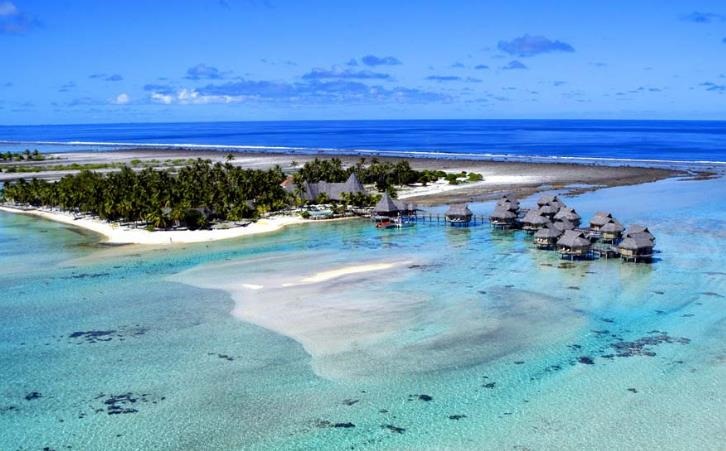
You know those iconic cartoons of a deserted island with a plot sand and palm tree in the middle of the ocean…that’s the Maldives. A thousand of those.

The Maldives sits at that a magic elevation of pretty much exactly sea level. The Great Barrier Reef is just below sea level (hence very few islands and hardly any resorts). Tropical islands like Mauritius and the Seychelles *tower* above rising to hundreds of feet in the air. The Maldives rest right in the sweet spot. Virtually right at sea level like linen white sand rafts floating in the ocean. The interleaving of water and land in cozy embrace liken the destination to a tropical Venice.

And the elevation distinction goes in both directions – not just the height of the land, but also the shallow depth of the water surrounding the land. As a result, the lagoons have a mill pond stillness which makes for crystal clear water. You can enjoy the dazzling aquatic sights from above the water seeing all manner of colourful fish like a giant aquarium.

The ubiquitous reefs lurking near the water’s surface produce a mesmerizing seascape tapestry of blues that is otherworldly. It is one of those special places on Earth (like Iceland, Grand Caynon, Zhangye Danxia) that make you feel like you are not just on a remarkable part of the planet, but on another planet altogether.

The tininess of the islands and their proximity to not just the ocean but the aquatic wonderland within it, makes for a uniquely intimate connection with the sea that is rarely experienced. I have world traveling friends who go to all sorts of tropical resorts and they always report back to me, “This place is wonderful…but it’s not the Maldives!”

Happy Birthday Maldives (Independence Day today)!

[POST SCRIPT – Fine post here contrasting Bora Bora itself a classic tropical island paradise) with the Maldives]

Best of the Maldives Online: Dhivehi Lessons – Maldives Secrets

If you do find yourself staying for an extended period or are just looking for some other project to embrace in the final months of lockdown, then why not learn the local language of the Maldives, Dhivehi? I reached out to the stars of this fun and helpful vlog, Kate and Hambe, who gave Maldives Complete an exclusive interview about their project:

  • What prompted you to make the Dhivehi lesson video?I personally couldn’t find a strong source for learning Dhivehi online, so I thought, why not create online lessons with both a fluent Dhivehi speaker and non-Dhivehi speaker? I thought this would ease the learning and through bite-sized and theme-focused lessons that are around 5 minutes each, we hope to provide a quick and fun learning experience!
  • What’s your favourite Dhivehi word or phrase? – I like the phrase “iru ossey manzaru varah reethi” which means “the sunset is very beautiful”.
  • Can Kate read Dhivehi too? – I am learning how to read, it takes more time and practice. We would potentially start writing lessons in the future too.
  • Are there any special sounds in the Dhivehi language (that might be a bit unfamiliar to a new speaker)?Not that I can think of. Most of the syllables / vowels are the same sound and it is quite a basic language with little complications.
  • What do you do for your day jobs?Hambe and Kate are both working as freelancers, in the aim of putting aside enough time for Maldives Secrets to truly blossom as tourism starts to pick up in the Maldives over the next few months. Hambe is a musician and Kate works in Marketing and by being based in Hulhumale, they have the flexibility of being able to travel easily to all islands in the Maldives.
  • What are your top 3 tips for choosing a guesthouse? / What is your top tip for choosing a guesthouse?The Island: When choosing a guesthouse, it’s important to understand the island you’ll be staying on. With thousands of islands in the Maldives, it may seem challenging to pick the right one… but trust me, there is definitely a local island that will suit your needs. Head to Dhigurah for the once in a lifetime experience of swimming with whale sharks, or explore the lush agricultural farms of Thoddhoo… Or go to the eco-friendly paradise of Hanimadhoo in the very north of The Maldives and do yoga every morning on the beach. These experiences are tailored to the island you’ll be staying on… so pick wisely!
  • How well do people who run guesthouses speak English? Usually very well, Maldivians in general tend to have a good level of English as it is a requirement to learn it at school.
  • What are the most useful phrases when staying at a guesthouse or visiting a local island?
    • What type of food would you like?: Koaccheh kaan beynumi?
    • I want to try Maldivian food: Aharen kaan beynumi dhivehi keun
    • No spice: Miroos naala
    • A little spice: Kuda kuda koh kulhikoh
    • A lot of spice: Varah kulhikoh
    • Can we have the bill?: Bill genes dheebah?
    • Where are the toilets?: Koba fahana?
    • Food is great: Varah meeru
    • I need some water: Aharen fen fodheh beynun
    • Thank you for the service: Varah bodah shukuriyyaa
    • Thank you!: Shukuriyyaa!
    • You’re welcome!: Marhaabaa!


Like the Maldives Only Taller

Huma Island - Philippines

As I discussed in my post “Maldives Methadone”, one of the most frequently discussed topic amongst Maldives addicts (known as victims of “Maldivitis”) is the question “Is there anywhere else on Earth like the Maldives?” (hopefully a little cheaper).

If you truly take the unique blend of characteristics that make the Maldives the very definition of Bounty-bar iconic paradise, then the selection is rather limited. So to extend the boundaries a little more generously, I’ve assembled a second tier collection of tropical islands that are like the Maldives in every way except elevation.

Unfortunately, adding a bit of topological height doesn’t really seem to lower the price that much. Most of the rates are comparable to top high-end 4-stars or value priced 5-star properties in the Maldives. But if you are okay with a largish pile of rocks instead a smallish plot of sand for your tropical island, then here are some Maldives cousins…

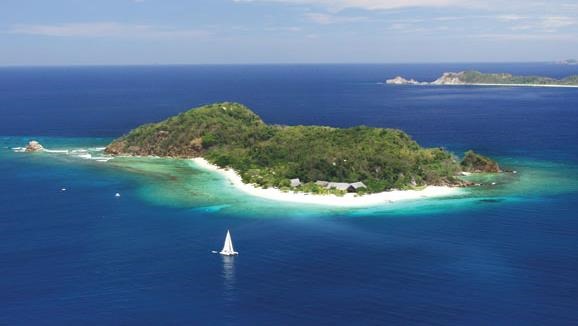
  1. Huma Island, Philippines (£484 per night) [ABOVE]
  2. Club Paradise Palawan, Philippines (£308 per night)
    Club Paradise Palawan - Philippines
      
  3. Constance Tsarabanjina, Madagascar (£427 per night)
    Constance Tsarabanjina - Madagascar
      
  4. Petit St. Vincent, Grenadines (£665 per night)
    Petit St. Vincent - Grenadines
       
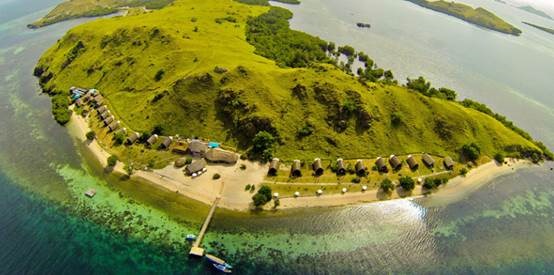
  5. Komodo Resort, Sebayur Indonesia (£380 per night)
    Komodo Resort - Sebayur (Indonesia)
       
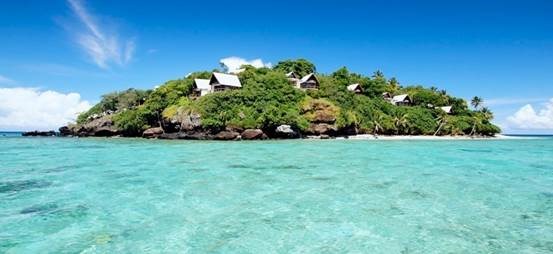
  6. Royal Davui Island Resort, Fiji (£560 per night)
    Royal Davui Island Resort - Fiji
       

Maldives’ Best Dive Sites in Each Atoll

If you can only dive one dive. This is the question we often find ourselves asking during our tours as we will typically spend only one or two nights at a resort and so only have the opportunity for one dive. So when we are planning our dive, we will ask, “well, what’s the best dive around here?” Even for people with the luxury of an extended stay, this is a fairly typical question. When we were having longer stays with the family years ago, we would still ask this question. Many times, we loved the dive so much we just opted to keep repeating it through the week (we went to Manta Point during our Kurumba stay three times).

One common feature that I noticed about many of the selections is that they are situated in channels at the edge of the ocean where the open water merges with the protected inner atoll waters. Such dives will often have a degree of current to them which limits them to AOW divers, but it is the current which contributes to the marine life and activity there.

For the research, I relied on the input from a range of dive schools and dive masters I have met over the years as well as Sam Harwood’ and Rob Bryning’s superlative book “Dive the Maldives” with occasional reference to Tim Godfrey’s “Dive Maldives”.

The list below is admittedly extremely subjective, but the choices are as good a place to start as any. I welcome suggestions and alternative proposals in the Comments section.

  • Addu: Maa Kandu East (Mudakan) – 3 of the 7 top dive sites reviewed by Harwood here have the top 5-star rating, but Mudakan is the most accessible and the only one with also a 5-star snorkelling rating.  “With magnificent table and brain corals, schools of fusilier, turtles, eagle rays, and sometimes manta make this beautiful dive an absolute joy.”
  • Baa: Hanifaru Bay – This Marine Protected Area has become so legendary that the government has actually put up restrictions on diving there. Still, divers can dive around the limits with the best chances to see its bountiful mantas and even the occasional whale shark.
  • Dhaalu: Fushi Faru – Recommended by St. Regis Vommuli dive centre Manish Mahadik saying, “An abundance of marine life including big schools of reef fish, colorful coral, lobsters, occasional Eagle Rays, Moray Eels and sharks…suited for all experience levels from beginner to advanced.”
  • Faafu: Jumping Jack – Recommended by Werner Lau as “This is one of our top dive sites [in the Maldives]. With milder currents, it offers less experienced divers a really truly pleasurable diving experience. Seven beautifully overgrown tilas on the outer reef edge connect the farus to the north and the south of the channel.”
  • Gaafu Dhaalu: Mafzoo Giri – One of two dive sites in the entire “Huvadhoo” (Gaafu Alifu and Gaafu Dhaalu together) atoll with 8 stars (out of possible 10 – 5 for Fish and 5 for Coral) by Alexander von Mende who wrote an entire guide book just on diving the atoll. And one of just 2 (with Kondey Kandu) with 5 stars for Fish.  “Offers a lot for its size…hosts no less than six residing leaf fishes behind a dizzying wall of glass fish.”
  • Gaafu Alifu: Mas Thila – One of two 7 star sites (out of possible 10 in von Mende’s book) and described as “a real jewel…one of the best dive sites in Huvadhoo”.
  • Haa Alifu: Becky’s Caves – Recommended by a number of dive masters to us. The nearest, JA Manafaru’s Sun Diving School describes is as “At the depth of 20 meters, one huge recess of the reef shows on one side a wall completely covered of soft corals of different colors; from yellow, pink, white to orange, a real universe of colors! Bring with you your torch and your camera: one fantastic dive for everybody but one rare show to see!”
  • Haa Dhaalu: Heaven & Hell Thila – The choice of Miranda Pontiglione, Base Leader at the Barefoot diving center – “For sure this is one of the best diving spots in our area. All the thila is covered by big colourful soft corals. Along the thila wall there are many overhangs where you can find cleaning shrimps, lobster, groupers and moray eels. A couple of canyons located in the deepest part of the thila will make your dive unforgettable.”
  • Laamu: Fushi Kandu – Commended by Ocean Dimensions’ Petra Hellaman at Six Senses Laaumu who says it is especially great for seeing sharks. “The most spectacular dive is when divers cross the channel…Then, divers can swim inside the atoll to try to encounter dolphins” (Daily Dive).
  • Lhaviyani: Kuredu Caves – I was told about this site by a number of Maldives aficionados before I finally got there and having dived there it remains one of my top ten most memorable dives ever. The highlight is the turtles. Not just lots of them, but the biggest turtles you will ever see. Honorable mentions to the striking “Shipyard” double (!) wreck site with the distinctive vertical wreck (whose bow protrudes out of the water).
  • Meemu: Mantas and More – The consensus recommendation from both dive centres in the atoll.   “Nearly untouched dive sites are easy to dive and feature a great diversity of corals and fishes. Several spectacular channels, e.g. Mantas & More, count amongst the top ten in the Maldives” -Werner Lau
  • Noonu: Dhiffushi Kandu – One of two sites called out by Harwood in Noonu “The highlight of this dive are the sightings of the large Green Turtles that inhabit the reef feeding off the sponges and corals. The reef has excellent fish and this is a great dive.”
  • North Ari: Miyaruga Thila – Tim Godfrey uses a 4-star rating system where only 4 dive sites out of the nearly 300 he reviewed in all the Maldives got the top mark – and 3 were in the North Ari Atoll. Of those, got the strongest coral rating. Godfrey describes Miyaruga, “The landscape is stunning and divers can easily circle the reef in one dive if the current permits…Much of the thila is undercut with caves and the surface is coated in soft coral and colourful sponges.”
  • North Male: Manta Point – Some of the most reliable mantas in the Maldives at a prominent and conveniently close feeding station.  “An astonishing number of manta rays can be seen here with they come to be cleaned” – Harwood.
  • Raa: Labyrinth – The most frequently sites and raved about Raa site on the web and the Dive Point dive center describes it as, “Medium-sized Thila which has crumbled over the centuries and has thereby formed wonderful canyons and tunnels in the reef. The Thila distinguishes itself with its huge schools of fishes and coral growth (soft- and hard corals). A big number of bat fishes accompanies you on every dive on this reef.”
  • South Ari: Kudarah Thila – Both Godfrey and Harwood list 2 top rated dive sites in the South Ari, but Kudarah Thila is the only one they both rate tops. “One of the most exciting dives in the South Ari” says Godfrey. I omitted the any of the diving areas on the southern tip famous for whale sharks (also an MPA) because there is no single one that predominates, diving is restricted because of the whale sharks, and snorkelling is often a better way to find and see them.
  • South Male: Kandooma Thila (aka Ran Thila) – Pretty much uniformly recommended to us by dive centres as Cocoa, Olhuveli, and Rihiveli and the only 4 star dive site in South Male in Godfrey’s “Dive Maldives” (“one of the most exciting dive sites in South Male Atoll and boasts great scenery as well as prolific fish life”)
  • Thaa: Guraidhoo Corner – The only Thaa dive site noted by Harwood with a 4-star dive rating, “A large crevice in the drop-off with over hangs and caves and swimthoughs. Here as the current eddies, huge balls of snapper, rainbow runner, jack fish, tuna and shark are common.”
  • Vaavu: Fotteyo Kandu – One of Harwood’s rare 5-star sites, “This is a stunning, remote place and it is well worth diving here at least twice and at least 4 or 5 times to fully appreciate its beauty.”

Maldives Methadone

Resort Destinations Like the Maldives

One of the more frequently asked questions on the Maldives TripAdvisor Forum is whether there is another other place on Earth similar to the Maldives. People bitten by the Laccadive bug which is known to inflict a lifelong addiction (case in point) seeking to get hooked up with a fix.

Usually the query is inspired by a stretched budget and the enquirer is seeking a generic, store-brand knock-off of the Maldives to satisfy their craving (in the Maldives Forum Search put in “like the Maldives” – here’s the longest thread). Thailand, Mauritius, Seychelles, Fiji, BVI, Turks & Caicos, Australia are frequently proposed, but a little research shows that nearly all resorts there are all on quite big islands and relatively close together. Aside from the basic similarities of sun and sand, not nearly the “plot of sand in the middle of the ocean” experience of the Maldives. World-travelling friends who introduced us to the Maldives have sent us postcards saying “[Tropical Island X] is wonderful…but it isn’t the Maldives.”. We ourselves have joined this island hunt with our trip to Indonesia which was superb…but it wasn’t the Maldives.

Over recent months I have been digging a bit deeper to come up with the closest facsimiles for those who need an alternative dose whether it be for a change of destination, somewhere less far to travel (the Maldives is quite an expedition for those on the other side of the world in the Americas), or even to save a bit of money. Despite the lattermost inspiration, nearly all the resorts I uncovered came in at just under $500 for entry level BB per person which is not too far off typical Maldives prices for nice 4+ star or a modest 5 star property. The closer the alternative destination property was to Maldives characteristics, the close the racks rate were to those in the Maldives.

There are obviously thousands of tropical island resorts in the world. For my most prominent filters, I excluded the following deal-breakers which keep a property from really having the Maldives vibe:

  • Big Islands – Must be small enough to walk around in the time it takes to drink a bottle of beer and no elevation.
  • Mediterranean – Weather and sea life too limited.
  • Private Islands – Financially inaccessible (for most) properties that rent for tens of thousands for the whole place such as Richard Branson’s Necker Island in the Caribbean, David Copperfield’s Musha Cay in the Bahamas, or Noa Noa in the Philippines.
  • Local Islands – The islands have to be dedicated resort islands (ie. no local residents), but can have multiple properties like Malaysia’s Mabul Island (and how the old Kuramathi, Maldives set up used to be).
  • Remote Undeveloped Islands – Great bolt holes for liveaboards and cruise vessels, but that is an entirely different proposition to a resort and not everybody’s cuppa tea.
  • Middle of the Ocean – Must be surrounded by 90% water with limited proximity, development, or high elevation islands on the horizon to preserve that “middle of the ocean” feel. This was the hardest aspect to adhere to and I bent consideration with a few selections below (eg. Akaiami Paradise Lodge, Le Taha’a Island, and Song Saa)

The top destinations with the most qualifying (and nearly qualifying) candidates are the following:

  • Belize – Seems the closest as an overall destination – lots of islands, many small, coral and diving. I’ve included in a couple in the catalogue below, but I came across a good deal of others in my research. Also, seems to be considerably lower cost (though also lower standard) than many Maldives properties.
  • Malaysia – Also, a good number of properties I came across and included a couple below.
  • French Polynesia – Known most widely for the biggest island Tahiti, but it does have quite an array of smaller gems (again, a couple examples included in the list below).

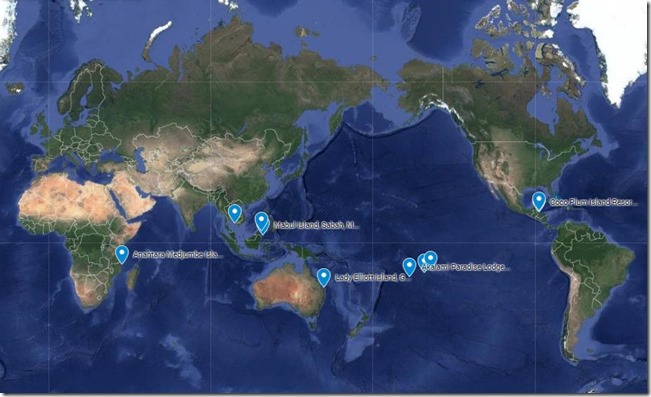
Below is a list of the most prominent examples of Maldives mould alternatives. This piece will be a living post so if and as people recommend or I otherwise discover other resorts that meet the criteria, I will add them to the post and map.

Price indicated are approximate rates per person bed and breakfast based on queries to the resort website.

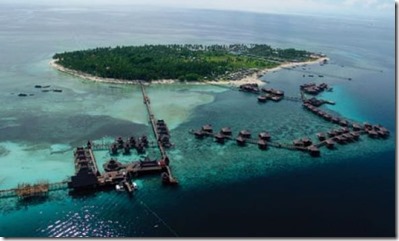
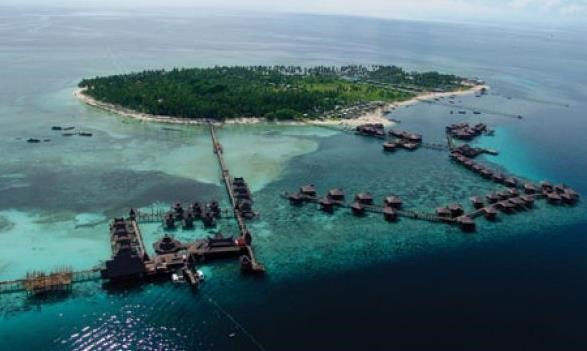
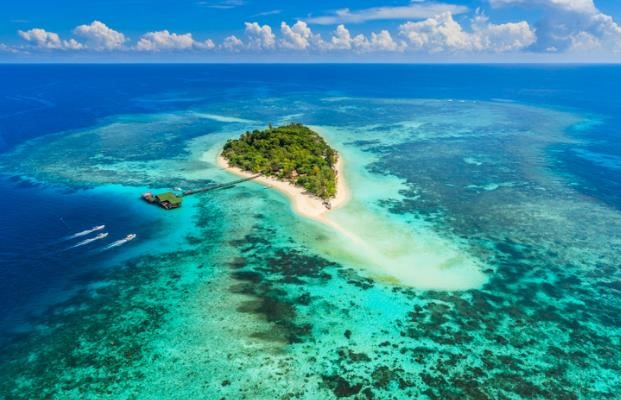
    1. Mabul, Borneo, Malaysia ($426pp)
      Mabul Borneo resort
         
    2. Lankayan Island, Borneo, Malaysia ($183pp)
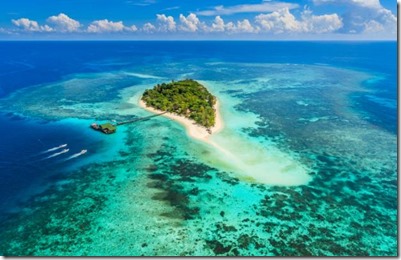
      Lankayan Borneo resort
         
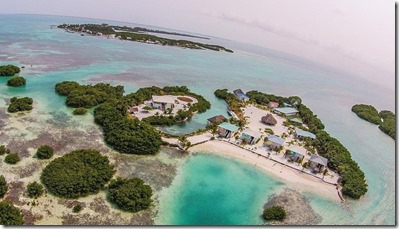
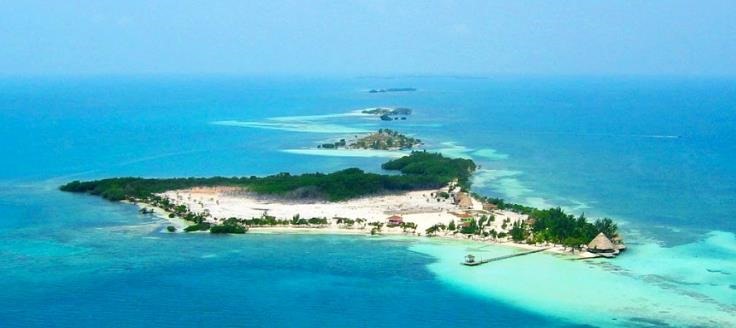
    3. Coco Plum Island Resort, Belize ($456pp)
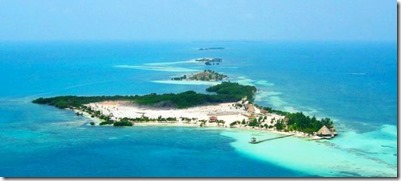
      Coco Plum Island Belize resort
          
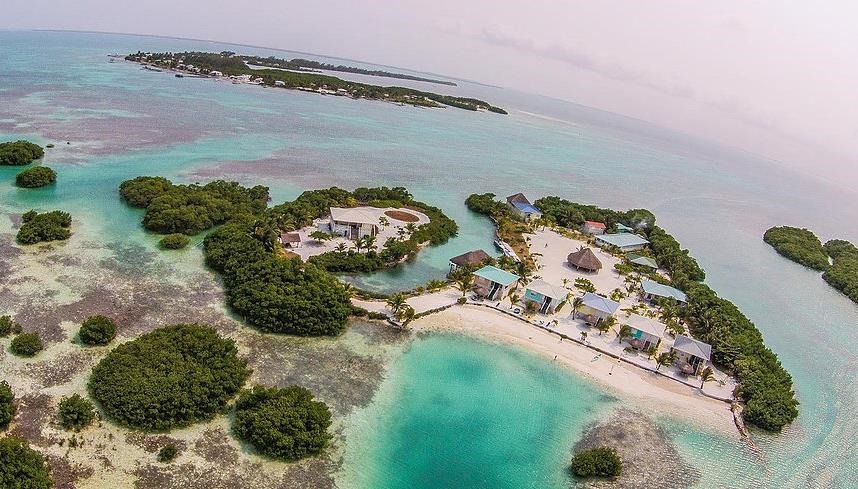
    4. Royal Palm Island, Belize ($120pp)
      Royal Plum Island Belize resort
          
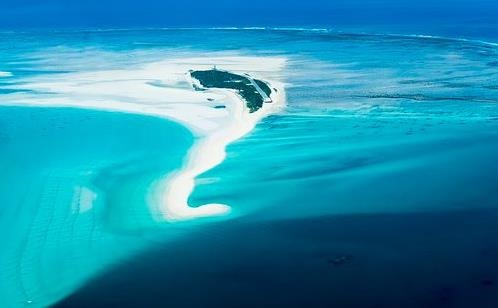
    5. Anantara Medjumbe Island, Mozambique ($390pp)
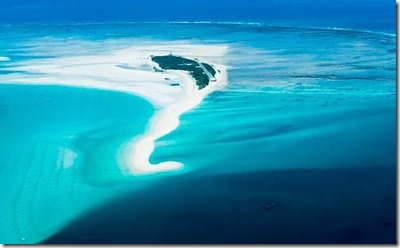
      Anantara Mediumbe Island Mozambique resort
          
    6. Denis Island, Seychelles ($600pp) – thanks Moira
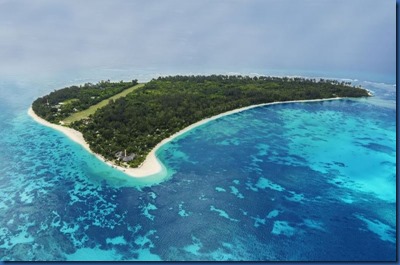
      Maldives like - Denis Island Seychelle
          
    7. Akaiami Paradise Lodge Aitutaki, Cook Islands, New Zealand ($480pp)
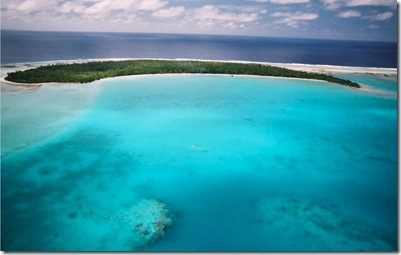
      Akaiami Paradise Lodge Aitutaki Cook Islands New Zealand resort
          
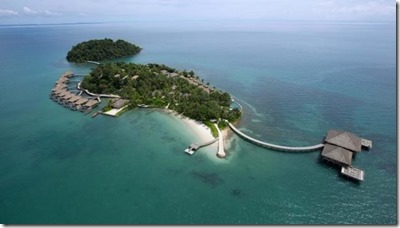
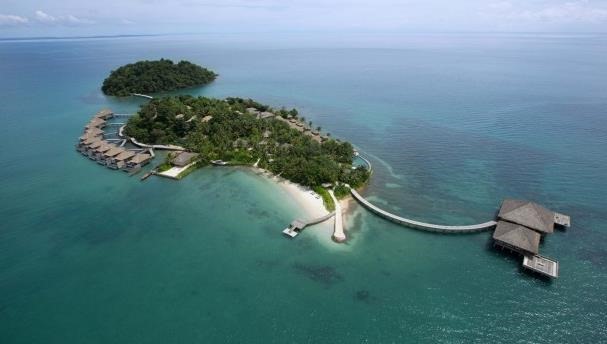
    8. Song Saa, Cambodia ($484pp)
      Song Saa Cambodia resort
          
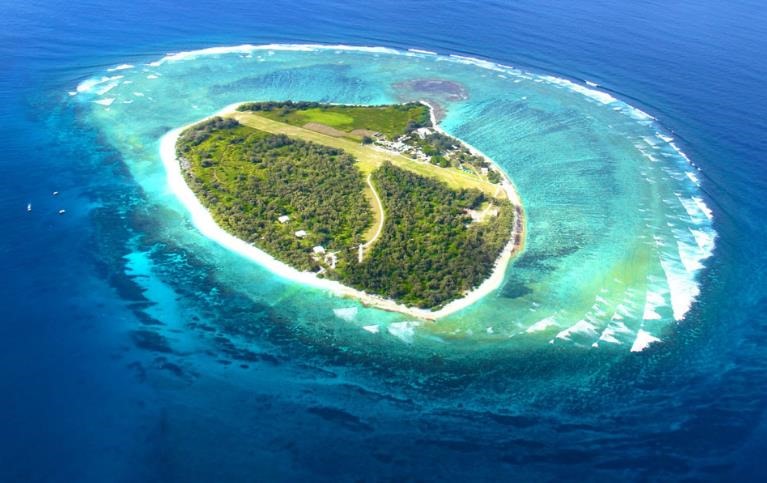
    9. Lady Elliott Island, Great Barrier Reef, Australia ($145pp)
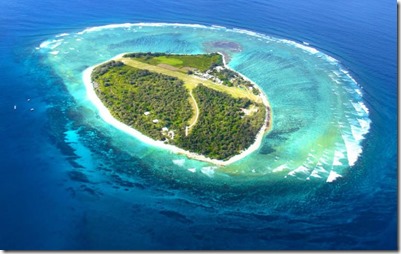
      Lady Elliott Island Great Barrier Reef Australia
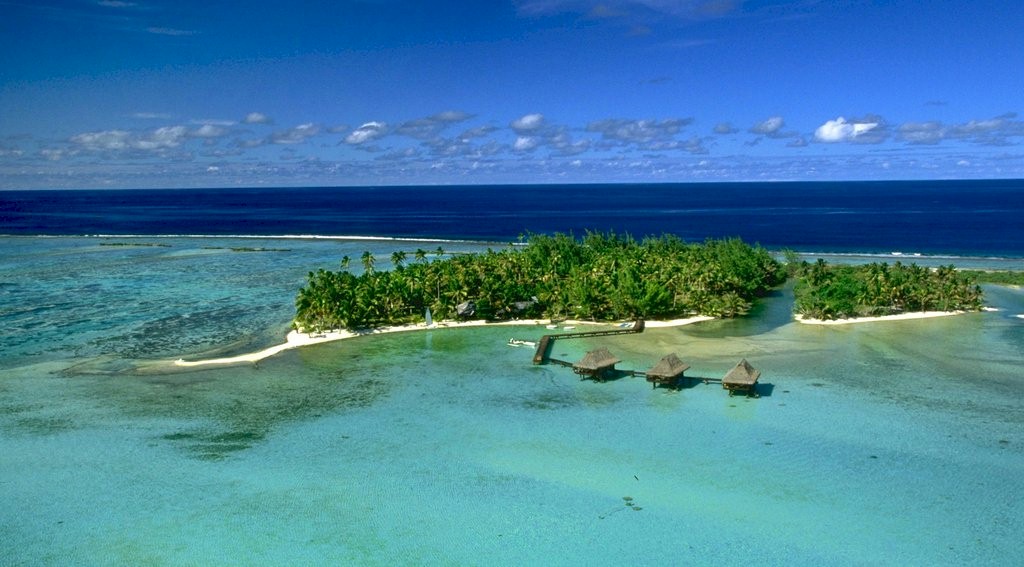
    10.  Vahine Island, French Polynesia ($311pp)
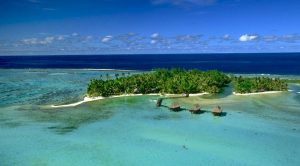
    11. Le Taha’a Island Resort, Tahiti ($517pp)
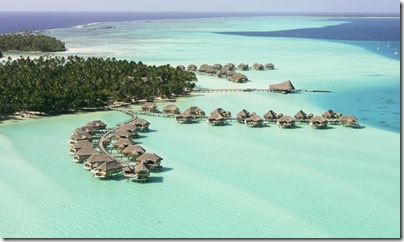
      Le Tahaa Island Resort Tahiti
            
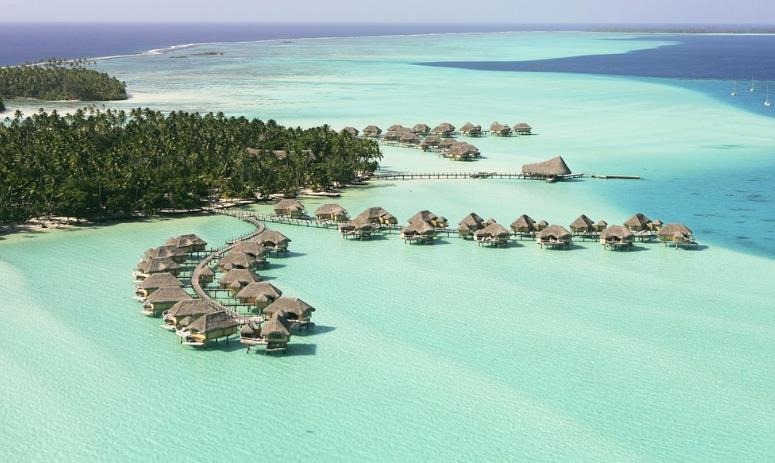
    12. Tikehau Pearl Beach Resort and Spa, Tahiti ($190pp)
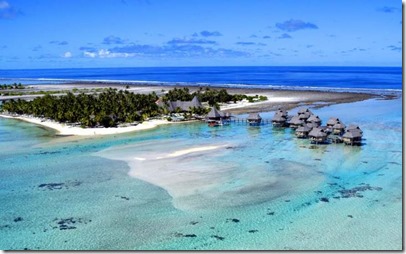
      Tikehau Pearl Beach Resort and Spa Tahiti resort