You arrive in an exotic country and then transfer to a small turboprop plane to traverse an expanse of water with a final short ferrying to your resort island. There you are welcomed with a cool towel and a refreshing drink before checking into your villa overlooking the water. Where are you? The Maldives? No, Xugana, in the Okavango Delta of Botwana. The “Maldives” of Africa.
Sometimes people are looking for the Maldives, but just not the Maldives. Maybe the distance is too far for them. Or there is some logistical or budgetary obstacle. I’ve researched a number of possibilities in “Maldives Methadone”, and “Like the Maldives Only Taller”. I even personally visited one of the candidates, Ray Caye in Belize – “Maldives of the Americas”.
A number of agents might point to a couple of islands off the Zanzibar coast (eg. Bawe Island) as the “Maldives of Africa”. But these are more “Indian Ocean” than “Africa”. If you want the true African aesthetic and vibe, Okavango Delta fits the bill better in which the Xugana safari camp is an exemplar.
- ISOLATION – Per the introductory paragraph, Xugana is off-the-beaten path. You take a long-haul to a major airport in the region with a connecting flight to Maun, Botswana followed by a puddle-jumper flight to the Delta followed by a boat transfer to the property. The result of which leads to a property set in what seems like the middle of nowhere with no sign of civilization for as far as the eye can see (less true of the Maldives resorts near local islands, but a cherished characteristic of all the others).
- PREMIUM DESTINATION – The quality of the landscape combined with the logistical challenges of supporting the remote properties (see above) make both premium destinations with luxury quality properties at about $1000/night.
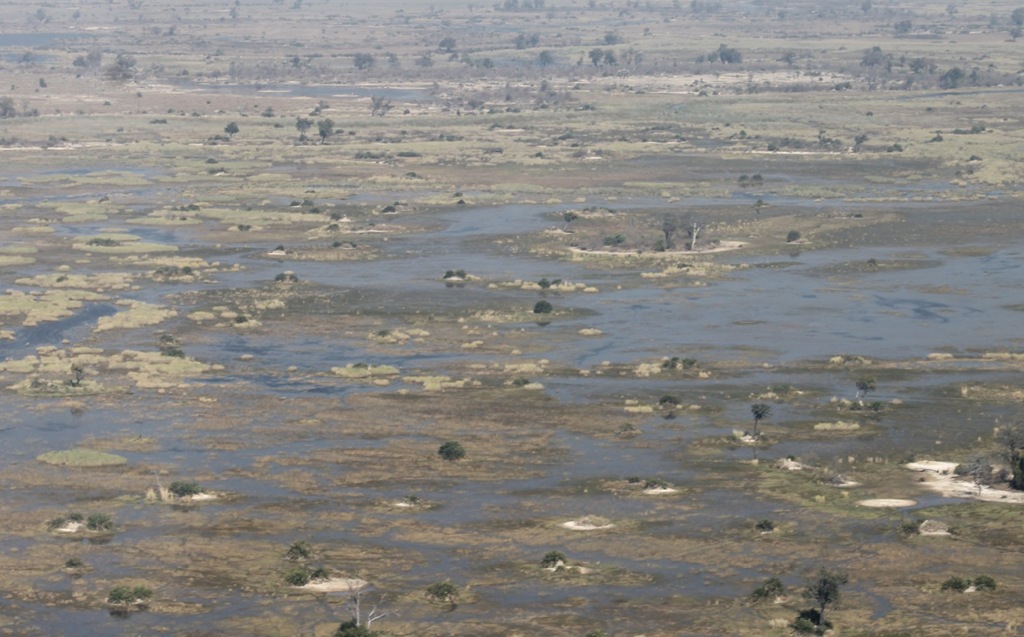
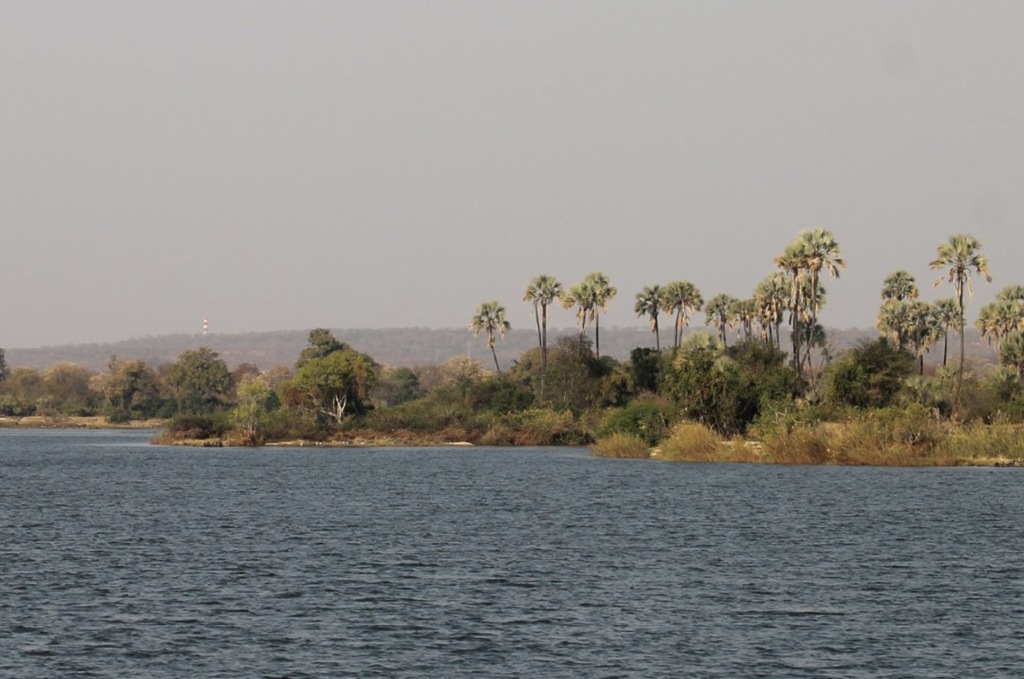
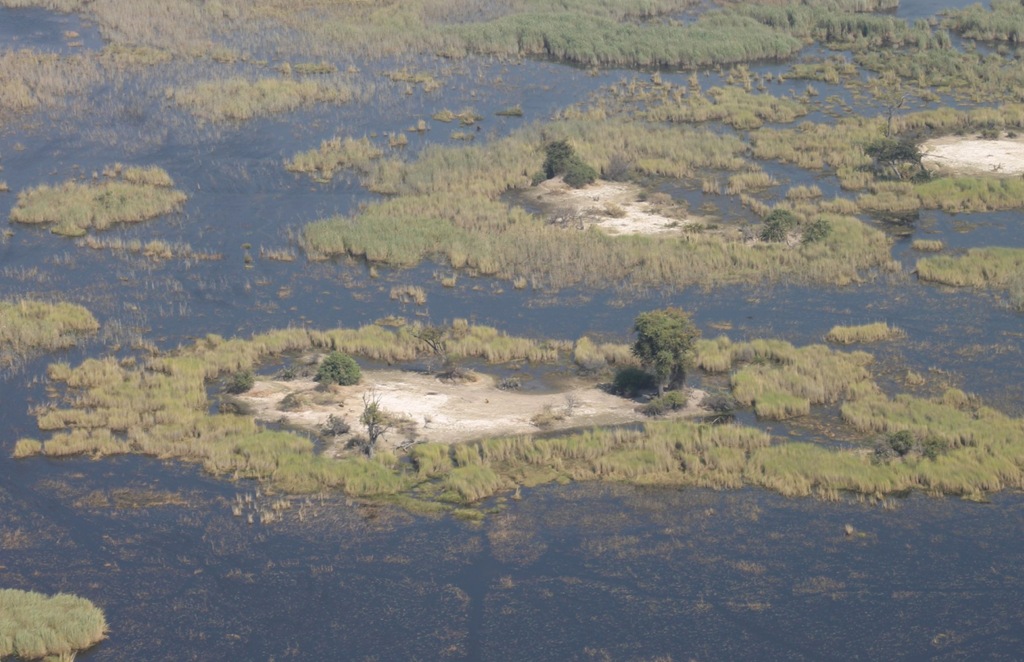
- WATER – This is, of course, what it is both places are all about. Both destinations are defined by water. There is more water than land. All of the excursions take you to various “islands” (see photo above and directly below).
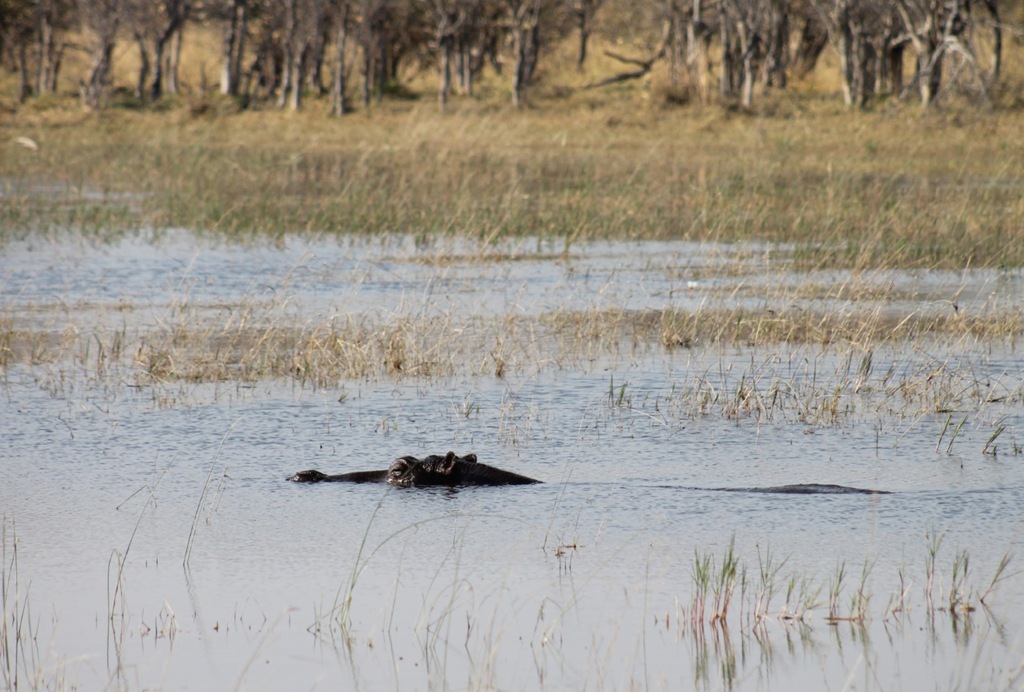
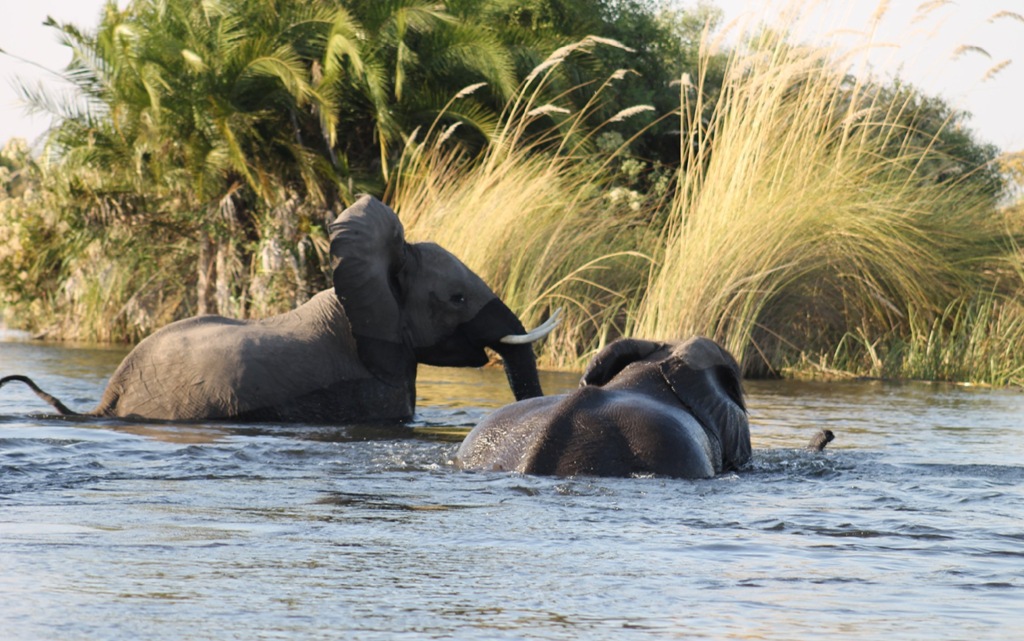
- ELEVATION – Of the land that does exist, neither of the destinations have any elevation over a couple of metres making for an intimate connection between water and land. The land exists in that space right at the edge of the tranquil lagoon waters. And the lagoons’ own shallow depths make for distinctive aquatic life that thrive in the shallows. In the Maldives, the lots of the wildlife linger in the shallows of the lagoons just under the surface; in the Delta, lots of the wildlife linger in the shallows as well just above the surface as waders or eyes peeking out (see photos below)
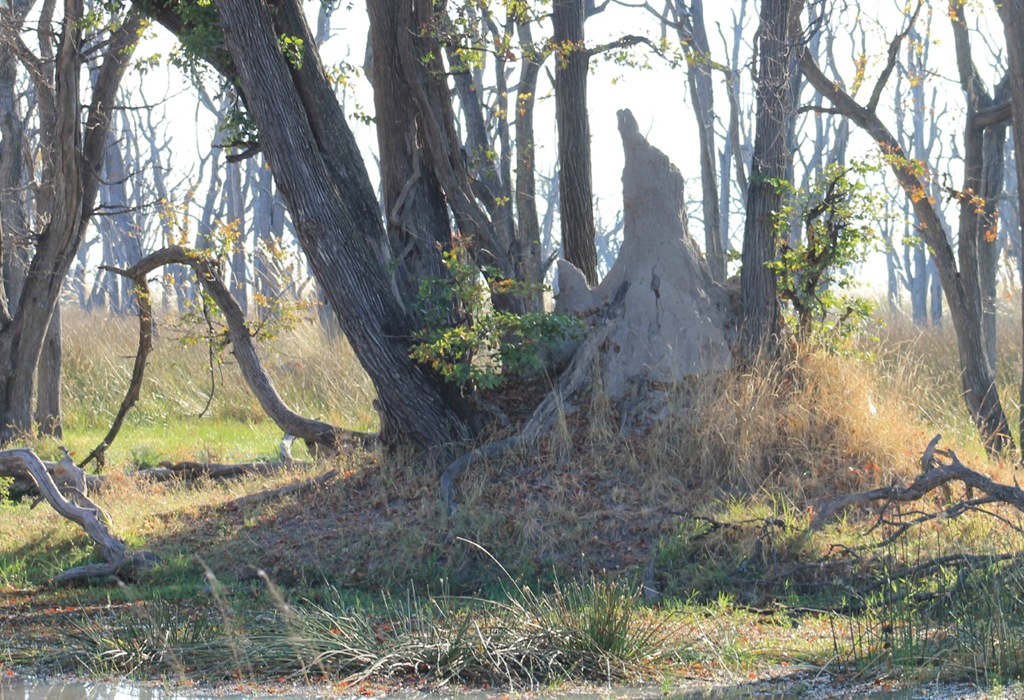
- DIGESTIVE TERRAFORMING. And the land that it there owes much to the digestive processes of a few residents. The sands of the islands are famously the by-product of parrot fish and other coral munchers grinding down coral (to get to tasty polyps inside) and excreting the powdery calcium carbonate exo-skeleton, also known as the white sands that make up the beaches and sand bars of the area. Similarly, large sections of the Delta landscape is the by-product of termites digesting trees and using the nutrients to make gigantic mounds which are the only places where the land rises significantly higher above the water level (see photo below)
- WILDLIFE – Maldives wildlife is more aquatic with some on land; Okavango is more land with some aquatic (hippos, crocodiles, otters). I’ve already written about the “Snorkeling Big 5” which riffed off the notion of the “Big 5” from African Safari’s. I would say that one could add the variant of the “Water Big 5” for which I would propose Hippo, Crocodile, Fish Eagle, Elephant, and Water Buffalo (the latter two already in the original “big 5”).
- SUSTAINABILITY FOCUS – Both the Maldivian and Botswanan governments have invested in significant sustainability initiatives as their appeal rests entirely on the vibrancy and health of its nature and environment.
- AESTHETIC – A popular design aesthetic is rustic chic. Roughhewn timers and thatched roofs to provide that indigenous vibe.